
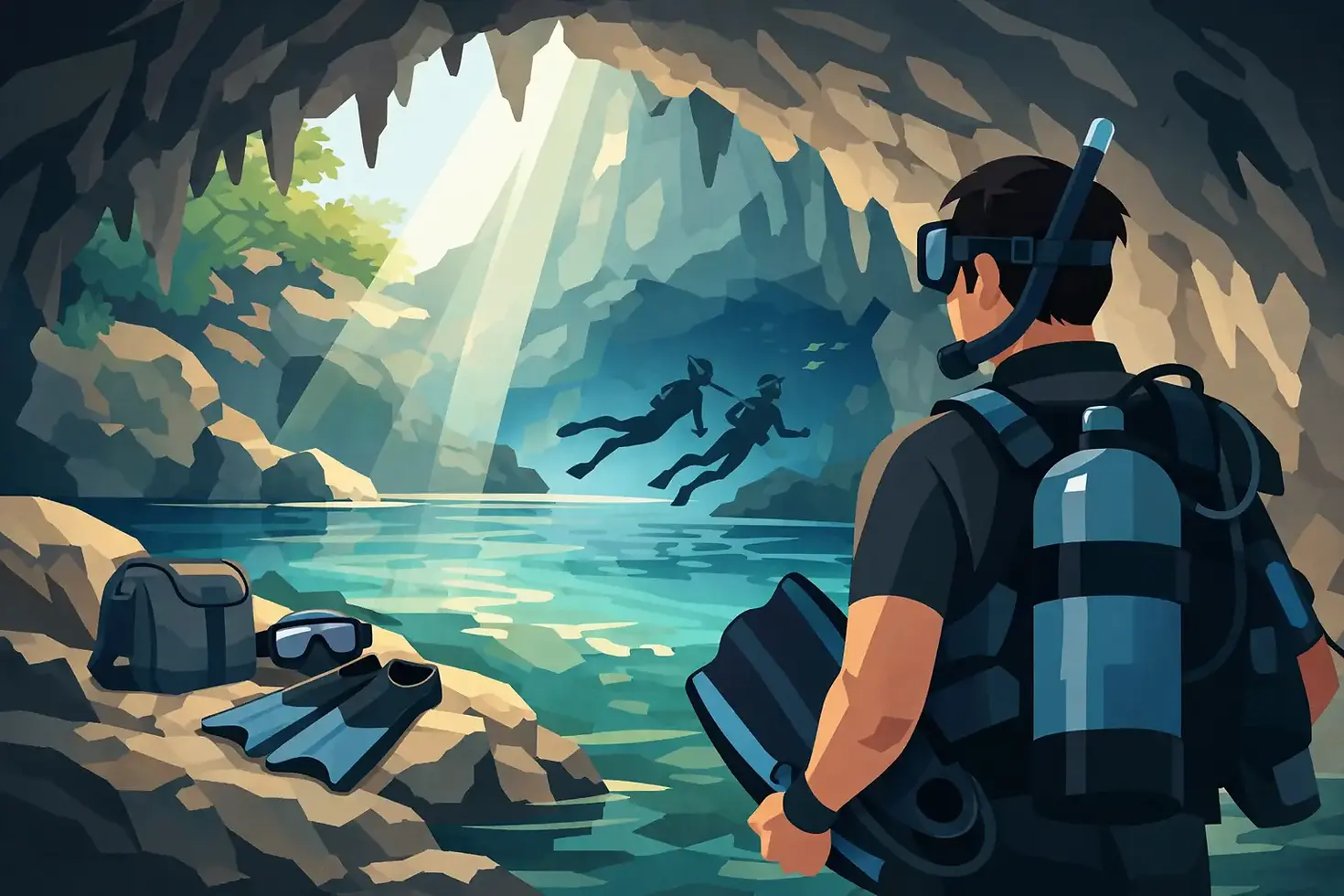
How to Prepare for Cave Snorkelling

Cold water on your face, a mask full of clear views, and a sea cave opening up ahead - cave snorkelling feels wild in the best possible way. If you are wondering how to prepare for cave snorkelling, the goal is not to become an expert overnight. It is to arrive calm, properly equipped, and ready to enjoy one of the most amazing water-based experiences on the coast.
Cave snorkelling sits in a sweet spot between adventure and accessibility. You do not need to be a freediver, but you do need to respect the environment, the conditions, and your own comfort level. A little preparation makes a big difference to how relaxed you feel once you are in the water.
What cave snorkelling actually asks of you
People often imagine cave snorkelling is all about bravery. In reality, it is more about composure. You will be swimming on the surface or making short duck dives in areas where rocks, swell, surge and visibility can all change the feel of the session.
That means your preparation should focus on four things - basic water confidence, suitable kit, realistic expectations, and a willingness to listen to your guide. If you are joining a guided session, especially as a beginner, you are not expected to know everything. You are expected to arrive ready to learn and honest about your experience.
How to prepare for cave snorkelling before the day
The best prep starts well before you pull on a wetsuit. If you are booking your first session, check the activity description properly rather than guessing what is involved. Cave snorkelling can mean different things depending on the coastline, the tide state, the water temperature and whether the experience is designed for complete beginners or confident sea swimmers.
Be truthful when filling in any medical or experience forms. If you are a strong pool swimmer but have never been in the sea, say so. If you are comfortable in open water but nervous in enclosed spaces, say that too. Good instructors can work with nerves. What they cannot work with is missing information.
In the days beforehand, give yourself the best chance of feeling steady. Get decent sleep, stay hydrated, and avoid turning up hungover. Cold water and swell have a way of magnifying tiredness and dehydration. Eat a light meal before your session so you have energy without feeling heavy.
If you are prone to travel sickness or motion sickness at sea, mention it in advance and plan accordingly. Even if most of the session is close to shore, bobbing in surge around rocky features can unsettle some people.
Build comfort in the water, not false confidence
You do not need elite fitness for cave snorkelling, but you do need enough stamina to swim calmly and enough confidence to float without panicking. If it has been a while since you were in the water, a few gentle swims before your trip can help. Focus less on speed and more on relaxed breathing, floating on your front, and getting used to putting your face in the water.
If you have never used a mask and snorkel before, practise somewhere easy first. A calm bay, a sheltered swim spot, or even a pool session can make the first sea experience feel far more familiar. Knowing how to clear a snorkel or settle your breathing after lifting your head is simple, but it is much nicer to learn that before you are near rocks and swell.
This is also where mindset matters. Cave snorkelling is not about pushing through fear for the sake of a photo. It is about moving through a dramatic coastal environment in a controlled way. The more relaxed you are, the more you will see.
Choose the right kit and let it do its job
For most guided experiences, your core equipment will be provided. That usually includes a properly fitted wetsuit, mask, snorkel, fins and, depending on the conditions, extra thermal layers or safety equipment. Still, it helps to understand why each piece matters.
A good wetsuit is not just about warmth. Warmth protects decision-making. When you are cold, everything feels harder - breathing, concentration, and confidence included. A mask that fits properly is equally important. A small leak can become a big distraction if you are already feeling new to the environment.
Fins help with efficiency, but they also change how you move. First-timers sometimes kick too hard and tire themselves out quickly. Smooth, easy finning works better, especially around caves and narrow features where control matters more than force.
Bring the practical extras too. A towel, warm layers, water, and dry clothes for afterwards can make the whole day far more enjoyable. On the Causeway Coast, the post-swim warm-up is part of the experience.
Understand sea conditions without trying to be the skipper
One of the smartest parts of learning how to prepare for cave snorkelling is understanding that sea conditions shape everything. Wind, swell, tide, visibility and recent weather can all affect where a session runs and what is possible on the day.
You do not need to become a marine forecaster, but you should expect some flexibility. The best guides choose locations and routes based on safety and quality, not stubborn plans. Sometimes that means a cave-focused session becomes more of a coastal snorkel with sheltered exploration. That is not a downgrade. It is good judgement.
This matters because many beginners picture flat, tropical-style water and are surprised by the movement in British and Irish seas. Surge is normal. So is cooler water. If you arrive expecting a natural environment rather than a swimming pool, you are far more likely to enjoy yourself.
Safety is part of the adventure
The safest cave snorkellers are not the boldest. They are the ones who stay aware, communicate clearly, and do not pretend to be comfortable when they are not. Before your session, pay attention to the safety briefing. It is not the bit to tune out while you adjust your hood.
You should know how the group will move, what signals are used, what to do if you need help, and what the guide expects near cave entrances or rocky sections. Ask questions if anything is unclear. That is not slowing the group down. It is part of being switched on.
If you feel anxious once you are in the water, say so early. A small wobble is easy to manage. Left unspoken, it can spiral. Good guides would always rather adapt the session than have someone trying to grin through discomfort.
What beginners often get wrong
The most common mistake is assuming cave snorkelling is only for fearless outdoorsy types. In reality, plenty of first-timers love it because it is guided, structured and immersive. The challenge is often more mental than physical.
Another mistake is overpreparing in the wrong direction. You do not need to buy loads of gear before your first session, and you do not need to train like you are crossing the Channel. You need to arrive rested, open-minded and ready to follow instruction.
The third mistake is chasing the cave and forgetting the coast. Marine life, rock formations, light entering the water, and the feeling of moving through a hidden corner of the shoreline are all part of the experience. If conditions limit access to one feature, there is usually still plenty worth seeing.
How to prepare for cave snorkelling mentally
This is the part many people skip, yet it can transform the day. Expect your first few minutes in cold water to feel lively. Your breathing may speed up a little. That is normal. If your guide gives you time to settle, take it. Slow your exhale, float, and let your body adjust.
It also helps to separate nerves from danger. Feeling excited or slightly apprehensive before an adventure is normal. It does not automatically mean the activity is wrong for you. What matters is whether the session is run professionally, whether the conditions suit your level, and whether you feel able to communicate openly.
If enclosed spaces make you uneasy, mention that before entering any cave feature. Not all cave snorkelling involves deep penetration into dark spaces. Some of the best moments happen at entrances, arches and narrow channels where you still get the thrill of exploration without feeling boxed in.
On the day, keep it simple
Turn up with time to spare. Rushing is the fastest way to start tense. Listen to the briefing, get your kit fitted properly, and do not be shy about asking for adjustments to your mask or wetsuit.
Once in the water, keep your movements steady and your breathing easy. Look around. One of the best parts of cave snorkelling is that moment when the coast changes character from above-water cliffs to underwater shapes, shadows and colour.
If you are booking with an experienced provider such as Freedive NI, trust the process. The point of a guided experience is that someone else has already done the hard work of reading the location, choosing the route and managing the safety side, so you can focus on the adventure.
The best prep is not about turning yourself into a hardened sea swimmer by next weekend. It is about giving yourself enough comfort, trust and headspace to enjoy what is right in front of you - cold water, wild coastline and a completely different way of seeing the shore.


Comments